

Road Bike vs Hybrid Bike: Which One Is Right for You?
Choosing a bicycle can be exciting, but it can also be confusing when you are faced with so many different types. Two of the most popular options for everyday riders are road bikes and hybrid bikes. Both can be excellent choices, but they are designed with different riding styles in mind.
If you are planning to cycle around London, commute to work, ride for fitness, or simply enjoy weekend trips, understanding the difference between a road bike and a hybrid bike can help you make the right decision.
So, which one should you choose? Let’s compare the two and look at what each type of bike does best.
What Is a Road Bike?
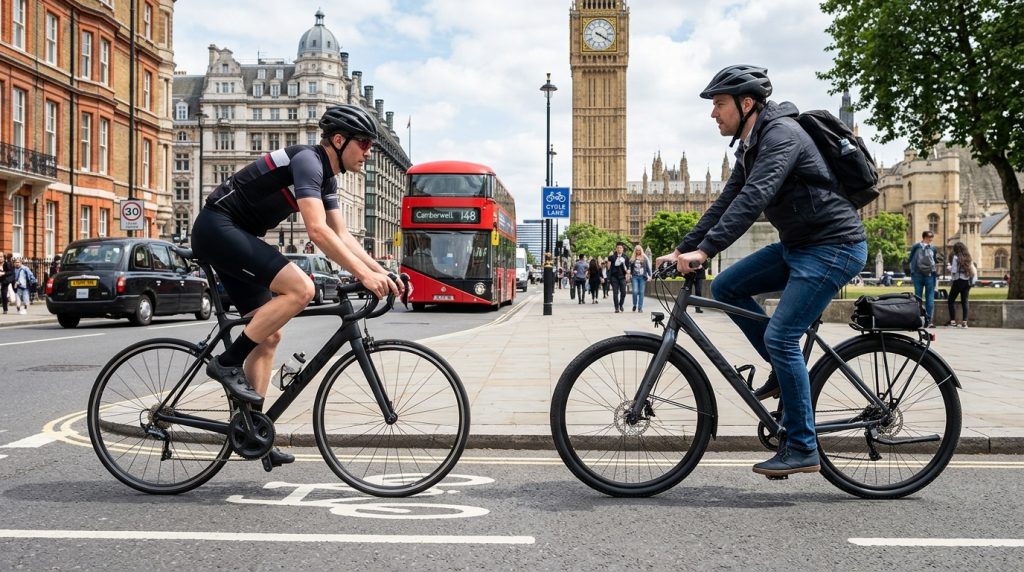
A road bike is designed mainly for riding on paved roads. It usually has narrow tyres, a lightweight frame and drop handlebars. These features help the bike move efficiently and quickly across smooth surfaces.
Road bikes are popular with cyclists who enjoy longer rides, fitness training and road cycling. Their lightweight construction makes climbing hills easier, while the narrow tyres create less rolling resistance.
The riding position is generally more forward and aerodynamic than on a hybrid bike. This can be useful when you want to maintain higher speeds over longer distances.
However, road bikes are not always the most practical option for every cyclist. Narrow tyres can feel less comfortable on potholes, rough surfaces and uneven roads. The drop handlebars may also take some time for a beginner to get used to.
What Is a Hybrid Bike?
A hybrid bike combines features from different types of bicycles, usually taking ideas from road bikes and mountain bikes. The result is a versatile bicycle that can handle a variety of everyday riding conditions.
Hybrid bikes normally have wider tyres than road bikes, flat handlebars and a more upright riding position. This makes them comfortable for commuting, shopping, leisure rides and shorter fitness journeys.
For someone who wants one bicycle that can be used for several different purposes, a hybrid can be a practical choice.
You can ride a hybrid bike on roads, cycle paths and some light gravel or park trails. It may not be as fast as a dedicated road bike, but it offers greater flexibility.
Speed and Performance
If speed is your main priority, a road bike generally has the advantage.
The lightweight frame, narrow tyres and aerodynamic riding position allow a road bike to travel efficiently on smooth roads. Riders who regularly cover long distances may notice the difference, particularly when maintaining a faster pace.
Hybrid bikes are still capable of good speeds, but they are built with comfort and versatility in mind rather than pure performance. Their wider tyres and more upright position can create slightly more resistance.
For everyday cycling, however, the difference may not matter as much as you think. If you are commuting through busy London streets, avoiding traffic and stopping frequently, outright speed is unlikely to be the only factor that matters.
Comfort and Riding Position
Comfort is one of the biggest differences between the two bikes.
A hybrid bike usually provides a more upright riding position. You can sit higher and maintain a natural view of the road ahead. This can be particularly useful when cycling through busy urban areas.
Road bikes place the rider in a more forward position. This is useful for reducing wind resistance and improving performance, but some beginners may find the position less comfortable at first.
If you are planning relaxed rides rather than racing or covering long distances at speed, a hybrid bike may feel more natural.
That said, comfort also depends on the correct frame size, saddle position and handlebar setup. Even a high-quality bike can feel uncomfortable if it does not fit you properly.
Tyres and Different Surfaces
Tyres have a major effect on how a bicycle handles.
Road bikes usually have relatively narrow, smooth tyres designed for paved surfaces. They roll efficiently and help the rider maintain speed.
Hybrid bikes generally use wider tyres with more tread. These provide additional stability and can cope better with imperfect roads, cycle paths and light off-road surfaces.
London roads are not always perfectly smooth. Potholes, broken surfaces, drains and uneven paths are common issues for cyclists. A hybrid bike’s wider tyres can provide extra confidence in these conditions.
If most of your riding takes place on smooth roads, a road bike’s tyres may suit you perfectly. If you regularly move between roads, parks and cycle paths, the hybrid offers more flexibility.
Which Bike Is Better for Commuting?
Both can work well for commuting, but the better choice depends on your journey.
A road bike can be an excellent commuter for someone travelling a longer distance on mostly paved roads. Its efficiency can make a noticeable difference during longer journeys.
A hybrid bike, however, is often more practical for general city commuting. The upright position gives you a good view of your surroundings, while the wider tyres provide stability.
Hybrid bikes can also be convenient if your commute includes different surfaces or if you need to carry a small amount of luggage.
For a typical London commuter who wants comfort and practicality rather than maximum speed, a hybrid bike is often the easier option.
Which Is Better for Long-Distance Cycling?
When it comes to longer road rides, a road bike usually comes out ahead.
Its lightweight design and efficient tyres are suited to covering significant distances. The drop handlebars also allow riders to change hand positions during longer journeys, which can help reduce fatigue.
A hybrid bike can certainly be used for long rides, especially if comfort is more important than speed. However, riders who regularly complete long road routes may eventually prefer the efficiency and riding position of a road bike.
If you are planning occasional long rides rather than cycling hundreds of kilometres regularly, a hybrid may still provide everything you need.
Maintenance and Everyday Practicality
Neither type of bike is particularly difficult to maintain, but your riding environment will affect how much maintenance is required.
Road bikes can have lightweight components that require proper adjustment and care. Keeping the tyres correctly inflated is especially important because road bike tyres are narrower.
Hybrid bikes are generally straightforward for everyday riders. Their wider tyres can be more forgiving, and many models are designed with practical features such as mounts for mudguards and luggage racks.
Regardless of which bike you choose, regular cleaning, chain lubrication, brake checks and tyre inspections can help keep it running smoothly.
Road Bike vs Hybrid Bike: Which One Should You Choose?
The best bike is the one that suits the way you actually ride.
Choose a road bike if:
- You enjoy speed and performance.
- You regularly ride on paved roads.
- You plan to cover longer distances.
- You are interested in road cycling or racing.
- You prefer a lightweight bicycle.
- You want an efficient bike for fitness riding.
Choose a hybrid bike if:
- You want a versatile everyday bicycle.
- Comfort is important to you.
- You regularly commute around town.
- You ride on roads and cycle paths.
- You prefer flat handlebars.
- You want a practical bike for leisure and general cycling.
There is no universally better option. A cyclist who spends every weekend covering long road distances may love a road bike, while someone commuting through London every day may find a hybrid much more useful.
Think About How You Will Actually Ride
One of the easiest mistakes when buying a bike is choosing based on appearance rather than purpose.
A road bike may look fast and exciting, but if you mainly want to cycle to the shops, ride through local parks and commute occasionally, you may not need one.
Likewise, a hybrid bike might be extremely practical, but if you are serious about road cycling and want to improve your speed over long distances, a road bike could be the better investment.
Think about where you will ride, how far you normally travel, the type of roads you use and how often you plan to cycle. Your answers will make the decision much easier.
Getting the Right Size Matters
Whichever type of bicycle you choose, getting the correct size is essential.
A bike that is too large or too small can make riding uncomfortable and may affect your control. Frame size, saddle height, handlebar position and reach should all be considered.
If possible, sit on the bike before buying it and take a test ride. A few minutes of riding can tell you a lot about how comfortable and natural the bike feels.
It is also worth asking for professional advice if you are unsure. An experienced bike shop can help you choose a suitable frame size and make adjustments to improve your riding position.

Final Thoughts
Road bikes and hybrid bikes are both excellent choices, but they serve different purposes. Road bikes are built for speed, efficiency and longer paved-road rides, while hybrid bikes focus on comfort, versatility and everyday practicality.
If your cycling involves commuting, short trips, leisure rides and a mixture of surfaces, a hybrid bike could be the ideal choice. If you are more interested in speed, fitness and long-distance road cycling, a road bike may be a better fit.
The most important thing is to choose a bike that matches your lifestyle rather than simply choosing the bike that looks the most impressive.
If you are still unsure which option is right for you, Lea Bridge Cycles can help you explore suitable bikes and find an option that matches your riding needs, experience and budget. A good bike should make you want to ride more often, and choosing the right type is the first step towards enjoying every journey.Choosing a bicycle can be exciting, but it can also be confusing when you are faced with so many different types. Two of the most popular options for everyday riders are road bikes and hybrid bikes. Both can be excellent choices, but they are designed with different riding styles in mind.
If you are planning to cycle around London, commute to work, ride for fitness, or simply enjoy weekend trips, understanding the difference between a road bike and a hybrid bike can help you make the right decision.
So, which one should you choose? Let’s compare the two and look at what each type of bike does best.
What Is a Road Bike?
A road bike is designed mainly for riding on paved roads. It usually has narrow tyres, a lightweight frame and drop handlebars. These features help the bike move efficiently and quickly across smooth surfaces.
Road bikes are popular with cyclists who enjoy longer rides, fitness training and road cycling. Their lightweight construction makes climbing hills easier, while the narrow tyres create less rolling resistance.
The riding position is generally more forward and aerodynamic than on a hybrid bike. This can be useful when you want to maintain higher speeds over longer distances.
However, road bikes are not always the most practical option for every cyclist. Narrow tyres can feel less comfortable on potholes, rough surfaces and uneven roads. The drop handlebars may also take some time for a beginner to get used to.
What Is a Hybrid Bike?
A hybrid bike combines features from different types of bicycles, usually taking ideas from road bikes and mountain bikes. The result is a versatile bicycle that can handle a variety of everyday riding conditions.
Hybrid bikes normally have wider tyres than road bikes, flat handlebars and a more upright riding position. This makes them comfortable for commuting, shopping, leisure rides and shorter fitness journeys.
For someone who wants one bicycle that can be used for several different purposes, a hybrid can be a practical choice.
You can ride a hybrid bike on roads, cycle paths and some light gravel or park trails. It may not be as fast as a dedicated road bike, but it offers greater flexibility.
Speed and Performance
If speed is your main priority, a road bike generally has the advantage.
The lightweight frame, narrow tyres and aerodynamic riding position allow a road bike to travel efficiently on smooth roads. Riders who regularly cover long distances may notice the difference, particularly when maintaining a faster pace.
Hybrid bikes are still capable of good speeds, but they are built with comfort and versatility in mind rather than pure performance. Their wider tyres and more upright position can create slightly more resistance.
For everyday cycling, however, the difference may not matter as much as you think. If you are commuting through busy London streets, avoiding traffic and stopping frequently, outright speed is unlikely to be the only factor that matters.
Comfort and Riding Position
Comfort is one of the biggest differences between the two bikes.
A hybrid bike usually provides a more upright riding position. You can sit higher and maintain a natural view of the road ahead. This can be particularly useful when cycling through busy urban areas.
Road bikes place the rider in a more forward position. This is useful for reducing wind resistance and improving performance, but some beginners may find the position less comfortable at first.
If you are planning relaxed rides rather than racing or covering long distances at speed, a hybrid bike may feel more natural.
That said, comfort also depends on the correct frame size, saddle position and handlebar setup. Even a high-quality bike can feel uncomfortable if it does not fit you properly.
Tyres and Different Surfaces
Tyres have a major effect on how a bicycle handles.
Road bikes usually have relatively narrow, smooth tyres designed for paved surfaces. They roll efficiently and help the rider maintain speed.
Hybrid bikes generally use wider tyres with more tread. These provide additional stability and can cope better with imperfect roads, cycle paths and light off-road surfaces.
London roads are not always perfectly smooth. Potholes, broken surfaces, drains and uneven paths are common issues for cyclists. A hybrid bike’s wider tyres can provide extra confidence in these conditions.
If most of your riding takes place on smooth roads, a road bike’s tyres may suit you perfectly. If you regularly move between roads, parks and cycle paths, the hybrid offers more flexibility.
Which Bike Is Better for Commuting?
Both can work well for commuting, but the better choice depends on your journey.
A road bike can be an excellent commuter for someone travelling a longer distance on mostly paved roads. Its efficiency can make a noticeable difference during longer journeys.
A hybrid bike, however, is often more practical for general city commuting. The upright position gives you a good view of your surroundings, while the wider tyres provide stability.
Hybrid bikes can also be convenient if your commute includes different surfaces or if you need to carry a small amount of luggage.
For a typical London commuter who wants comfort and practicality rather than maximum speed, a hybrid bike is often the easier option.
Which Is Better for Long-Distance Cycling?
When it comes to longer road rides, a road bike usually comes out ahead.
Its lightweight design and efficient tyres are suited to covering significant distances. The drop handlebars also allow riders to change hand positions during longer journeys, which can help reduce fatigue.
A hybrid bike can certainly be used for long rides, especially if comfort is more important than speed. However, riders who regularly complete long road routes may eventually prefer the efficiency and riding position of a road bike.
If you are planning occasional long rides rather than cycling hundreds of kilometres regularly, a hybrid may still provide everything you need.
Maintenance and Everyday Practicality
Neither type of bike is particularly difficult to maintain, but your riding environment will affect how much maintenance is required.
Road bikes can have lightweight components that require proper adjustment and care. Keeping the tyres correctly inflated is especially important because road bike tyres are narrower.
Hybrid bikes are generally straightforward for everyday riders. Their wider tyres can be more forgiving, and many models are designed with practical features such as mounts for mudguards and luggage racks.
Regardless of which bike you choose, regular cleaning, chain lubrication, brake checks and tyre inspections can help keep it running smoothly.
Road Bike vs Hybrid Bike: Which One Should You Choose?
The best bike is the one that suits the way you actually ride.
Choose a road bike if:
- You enjoy speed and performance.
- You regularly ride on paved roads.
- You plan to cover longer distances.
- You are interested in road cycling or racing.
- You prefer a lightweight bicycle.
- You want an efficient bike for fitness riding.
Choose a hybrid bike if:
- You want a versatile everyday bicycle.
- Comfort is important to you.
- You regularly commute around town.
- You ride on roads and cycle paths.
- You prefer flat handlebars.
- You want a practical bike for leisure and general cycling.
There is no universally better option. A cyclist who spends every weekend covering long road distances may love a road bike, while someone commuting through London every day may find a hybrid much more useful.
Think About How You Will Actually Ride
One of the easiest mistakes when buying a bike is choosing based on appearance rather than purpose.
A road bike may look fast and exciting, but if you mainly want to cycle to the shops, ride through local parks and commute occasionally, you may not need one.
Likewise, a hybrid bike might be extremely practical, but if you are serious about road cycling and want to improve your speed over long distances, a road bike could be the better investment.
Think about where you will ride, how far you normally travel, the type of roads you use and how often you plan to cycle. Your answers will make the decision much easier.
Getting the Right Size Matters
Whichever type of bicycle you choose, getting the correct size is essential.
A bike that is too large or too small can make riding uncomfortable and may affect your control. Frame size, saddle height, handlebar position and reach should all be considered.
If possible, sit on the bike before buying it and take a test ride. A few minutes of riding can tell you a lot about how comfortable and natural the bike feels.
It is also worth asking for professional advice if you are unsure. An experienced bike shop can help you choose a suitable frame size and make adjustments to improve your riding position.
Final Thoughts
Road bikes and hybrid bikes are both excellent choices, but they serve different purposes. Road bikes are built for speed, efficiency and longer paved-road rides, while hybrid bikes focus on comfort, versatility and everyday practicality.
If your cycling involves commuting, short trips, leisure rides and a mixture of surfaces, a hybrid bike could be the ideal choice. If you are more interested in speed, fitness and long-distance road cycling, a road bike may be a better fit.
The most important thing is to choose a bike that matches your lifestyle rather than simply choosing the bike that looks the most impressive.
If you are still unsure which option is right for you, Lea Bridge Cycles can help you explore suitable bikes and find an option that matches your riding needs, experience and budget. A good bike should make you want to ride more often, and choosing the right type is the first step towards enjoying every journey.