
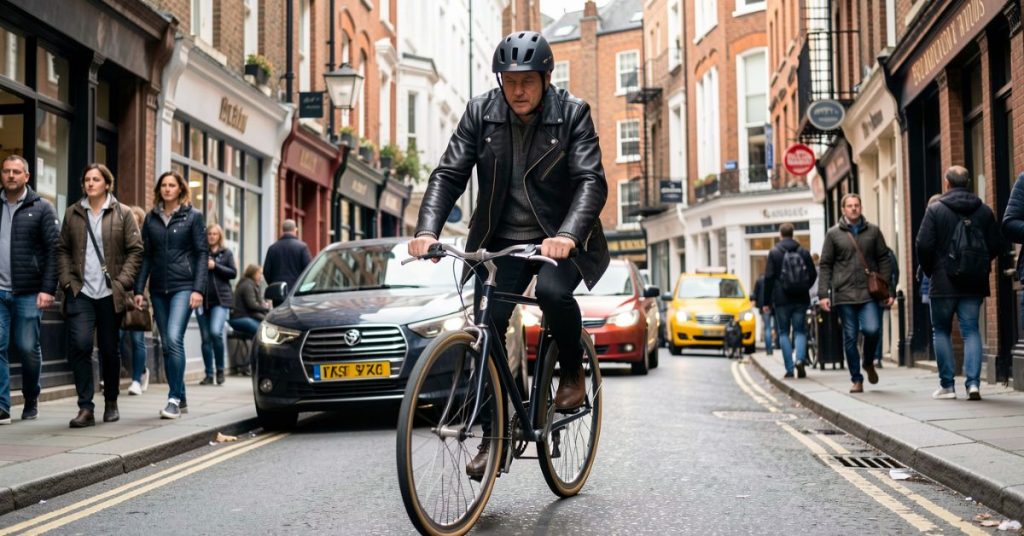
London has always had a way of turning everyday transport into identity. From black cabs to battered Oyster cards, how you move through the city often says as much about you as where you are going. Cycling is no exception. Over the past two decades, fixed gear bikes often called fixies have carved out a visible, sometimes polarising presence on London’s streets. To some, they’re a stylish badge of urban cool. To others, they are an impractical affectation, better suited to Instagram than rush hour traffic. The truth, as usual in London, is messier and far more interesting.
A City That Shapes Its Riders
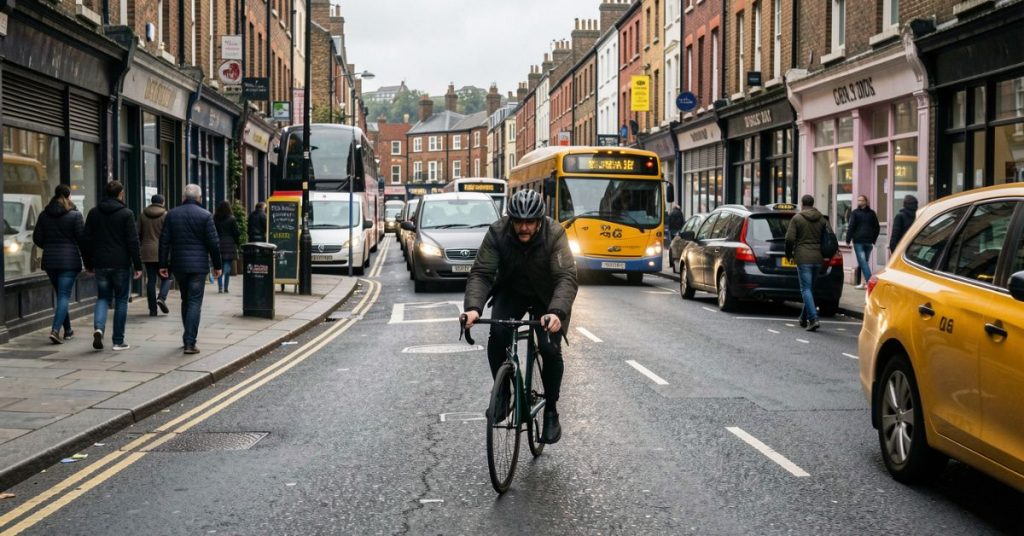
London is not an easy place to cycle. The roads are old, narrow, and crowded with vehicles that were never designed to coexist peacefully. Buses squeeze past cyclists with inches to spare, taxis dart unpredictably, and pedestrians step into the road without looking, headphones firmly in place. Riding here demands alertness and adaptability. It’s within this environment that fixed gear culture has taken root, not despite the chaos, but partly because of it. Unlike multi gear bikes, fixed gear bicycles have a drivetrain where the pedals are directly connected to the rear wheel. If the bike is moving, the pedals are turning. There’s no coasting, no clicking down gears when things get tough. At first glance, this seems wildly impractical for a city full of hills, stop start traffic, and wet winters. Yet Londoners persist, and not just a few of them.
From Track Roots to Urban Streets
The fixed gear bike origins are firmly planted in velodromes, where simplicity, efficiency, and control matter more than comfort. Track cyclists prize the direct connection between body and machine, the ability to feel every nuance of speed and resistance. When fixies began appearing on city streets in the late 1990s and early 2000s, they carried that heritage with them. In London, this coincided with the rise of messenger culture. Bike couriers needed machines that were lightweight, durable, and low maintenance. Fixed gear bikes made sense. Fewer components meant fewer things to break, especially under daily abuse. The ability to slow the bike using leg resistance offered a kind of intuitive control that suited weaving through traffic. What started as a practical choice for a specific job soon became something more visible, more stylised, and more symbolic.
Minimalism as a Statement
There is no denying the aesthetic appeal of fixed gear bikes. Clean lines, no dangling cables, often no brakes, and frames stripped down to their essentials. In a city saturated with noise and clutter, the fixie minimalism feels deliberate, even defiant. Riding one can look like a rejection of excess, a quiet protest against complexity. London fashion has always embraced this kind of understatement. The fixie fits neatly alongside rolled up jeans, vintage jackets, and carefully unkempt hair. It is transport, yes, but it is also an accessory. For some riders, the bike is as much about how it looks leaned against a cafe wall in Hackney as how it performs on the ride there. This is where accusations of posturing often arise. Critics argue that many fixed gear riders choose the bike for image rather than function, enduring discomfort and inconvenience for the sake of looking cool. There’s some truth in this, but it is far from the whole story.
Control, Not Convenience
Ask committed fixed gear riders why they stick with it, and you will hear less about fashion and more about feel. Riding fixed demands constant engagement. You can’t zone out or coast along half aware. Every movement of the bike passes through your legs. In traffic heavy London, that connection can foster a heightened sense of control. Stopping at lights becomes a fluid motion rather than a last minute grab of brakes. Accelerating out of junctions feels immediate and responsive. Many riders describe a rhythm that develops between body, bike, and city. It is not about speed so much as flow. This does not mean fixed gear bikes are objectively better for London. They are not. Hills are harder, long distances more tiring, and wet conditions riskier without proper braking systems. But functionality is not always about efficiency alone. Sometimes it is about how confidently and intuitively you can navigate your environment, and for some riders, fixed gear bikes offer exactly that.
Risk, Responsibility, and Reputation
No discussion of fixed gear culture in London would be complete without addressing safety. The image of the brake less fixie rider blasting through red lights has become a stereotype, fuelled by social media clips and frustrated road users. While many fixed gear bikes do have at least a front brake, the perception persists. There’s an uncomfortable truth here. Some riders do take unnecessary risks, mistaking skill for invincibility. In a city where cycling infrastructure is inconsistent at best, this behaviour doesn’t just endanger the rider, but everyone around them. It’s also contributed to a broader resentment toward cyclists, especially those who appear to flout rules. Yet it would be unfair to single out fixed gear riders as uniquely reckless. London’s roads are full of dangerous behaviour across all modes of transport. The fixie simply stands out more, visually and culturally, making it an easy target for criticism.
Belonging and Subculture
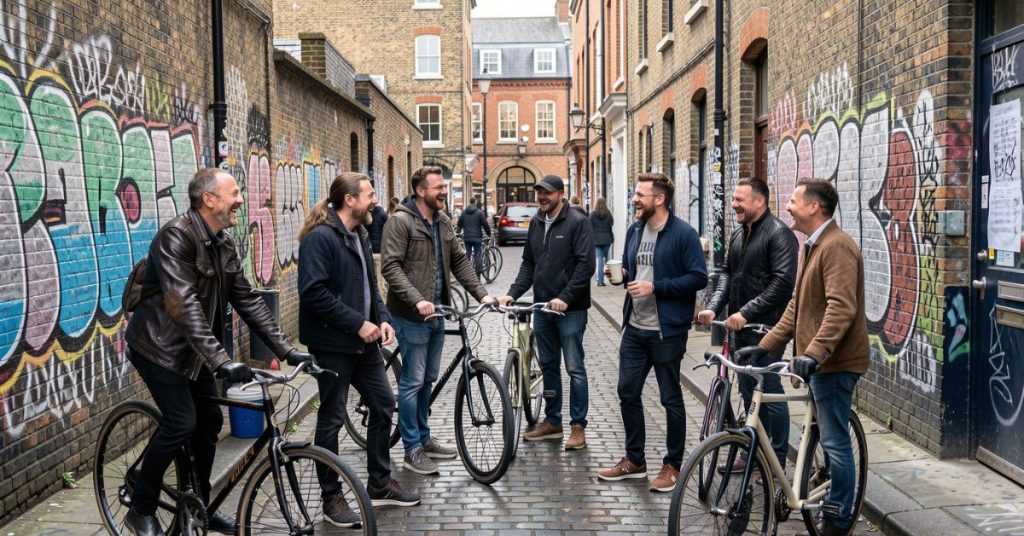
Fixed gear cycling in London is as much about community as it is about riding style. Group rides, alleycat races, and informal meetups have long been part of the scene. These gatherings aren’t just competitive they’re social, creative, and deeply tied to the city’s geography. Routes become stories, shortcuts become shared knowledge, and landmarks take on personal meaning. For many riders, choosing a fixed gear bike is a way of aligning themselves with this subculture. It’s about belonging to something slightly outside the mainstream, even as cycling itself becomes more accepted. In a rapidly changing city where neighbourhoods lose their character almost overnight, that sense of identity matters.
Fashion Versus Function Is the Wrong Question
So is fixed gear culture in London about fashion or function? The honest answer is that it’s both, and trying to separate the two misses the point. Londoners have always blended practicality with style. The city rewards those who can navigate its challenges while still expressing who they are. A fixed gear bike can be a functional tool for navigating dense traffic and a visual statement at the same time. The two aren’t mutually exclusive. In fact, they often reinforce each other. When a rider feels connected to their bike aesthetically and emotionally, they’re more likely to ride it confidently and consistently.
Where the Culture Is Heading
As London continues to invest, unevenly, in cycling infrastructure, the role of fixed gear bikes may evolve. E bikes and geared commuters dominate new cycling numbers, offering accessibility and ease that fixies simply can’t match. But fixed gear culture isn’t disappearing. It’s settling into its niche, less about trendiness and more about personal choice. Walk through East London today and you’ll still spot them locked to railings, paint chipped, chains humming as riders roll past. They’re quieter now, less of a statement than they once were, but perhaps more authentic for it. The riders who stick with them do so because it feels right, not because it’s fashionable. In that sense, fixed gear bikes mirror London itself. Complicated, occasionally impractical, sometimes misunderstood, but deeply loved by those who take the time to learn its rhythms. And whether you see them as art objects on wheels or stripped down machines built for control, they remain part of the city’s cycling fabric, from backstreet shortcuts to places like leabridge cycles, where the conversation between fashion and function continues, one ride at a time.