
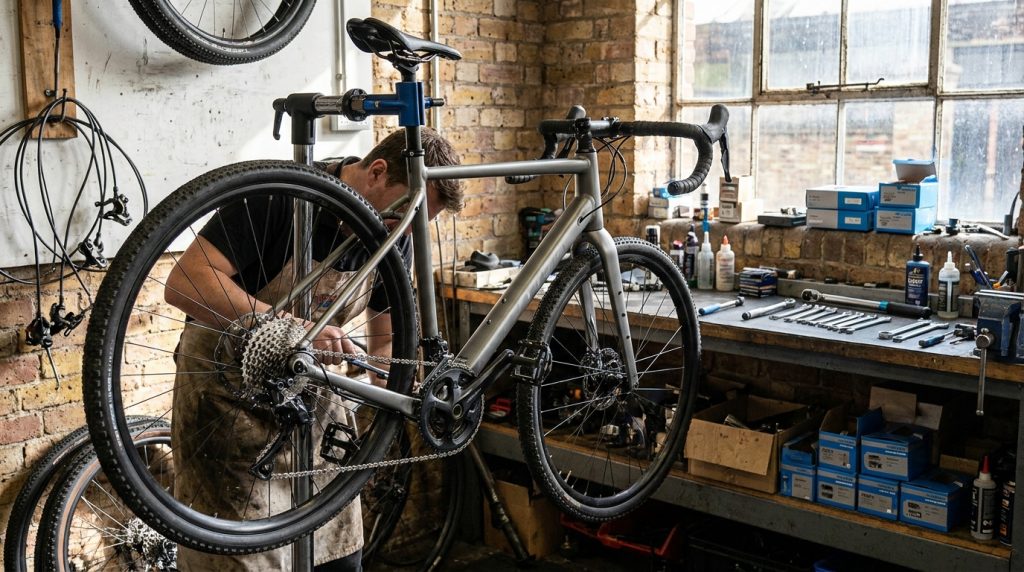
What Does a Full Bike Service Actually Include?
A bicycle may look simple, but it has many moving parts working together every time you ride. Brakes need to respond when you pull the levers, gears need to shift smoothly, tyres need to maintain the right pressure, and the wheels need to run straight. Over time, dirt, rain, regular use and general wear can affect how well all these components work.
That is where a full bike service can make a real difference.
A full service is more than simply cleaning a bicycle or putting air in the tyres. It involves checking the bike carefully, identifying worn or damaged parts, adjusting components and making sure everything is working as it should.
But what actually happens during a full bike service? Let’s take a closer look.
Why Does Your Bike Need a Full Service?
Even a well-maintained bicycle gradually develops problems. A chain becomes dirty or stretched, brake pads wear down, cables can lose their tension and bearings may become rough. Some issues are easy to notice, while others can develop quietly.
You might start noticing symptoms such as:
- Gears taking longer to change
- Brakes feeling less responsive
- Squeaking or unusual noises
- A loose headset or handlebar
- Wheels that do not spin smoothly
- A chain that skips under pressure
- Tyres showing signs of wear
- Creaking from the bottom bracket or other components
Ignoring these signs can allow a small problem to become a more expensive repair.
A full service gives the bicycle a thorough inspection and helps identify problems before they become more serious.
1. Full Bike Inspection
The first stage is usually a general inspection of the bicycle.
A mechanic checks the frame, forks, wheels, drivetrain, brakes, steering and other important components. The aim is to find anything that may need adjustment, cleaning, replacement or further investigation.
The frame is checked for visible damage, while components are inspected for signs of excessive wear. Bolts and fittings are also checked to make sure everything is secure.
This initial inspection is important because not every problem is obvious when you are riding the bike.
2. Checking and Adjusting the Brakes
Your brakes are among the most important parts of the bicycle, so they receive particular attention during a service.
The mechanic checks the brake pads for wear and examines their position against the braking surface. Brake cables and housing are inspected on cable-operated systems, while hydraulic systems may require additional checks.
Brake alignment and lever operation are also assessed.
If the brakes feel weak, rub against the wheel or make unusual noises, adjustment may be required. Severely worn pads or damaged components may need replacing.
A properly adjusted braking system should give you predictable control without excessive lever movement.
3. Gear and Drivetrain Check
The drivetrain includes several components that experience constant movement and friction. These include the chain, cassette or freewheel, chainrings, derailleurs and gear cables.
During a full service, the mechanic checks whether the gears shift correctly across the available range.
Poor shifting can be caused by several things, including cable tension, dirt, worn components or incorrect derailleur adjustment. Simply turning an adjustment screw without finding the underlying problem may not solve the issue.
The chain is also inspected for wear. A worn chain can eventually affect the cassette and chain rings, potentially increasing the cost of repairs.
Where necessary, the gears are adjusted so that shifting is smoother and more reliable.
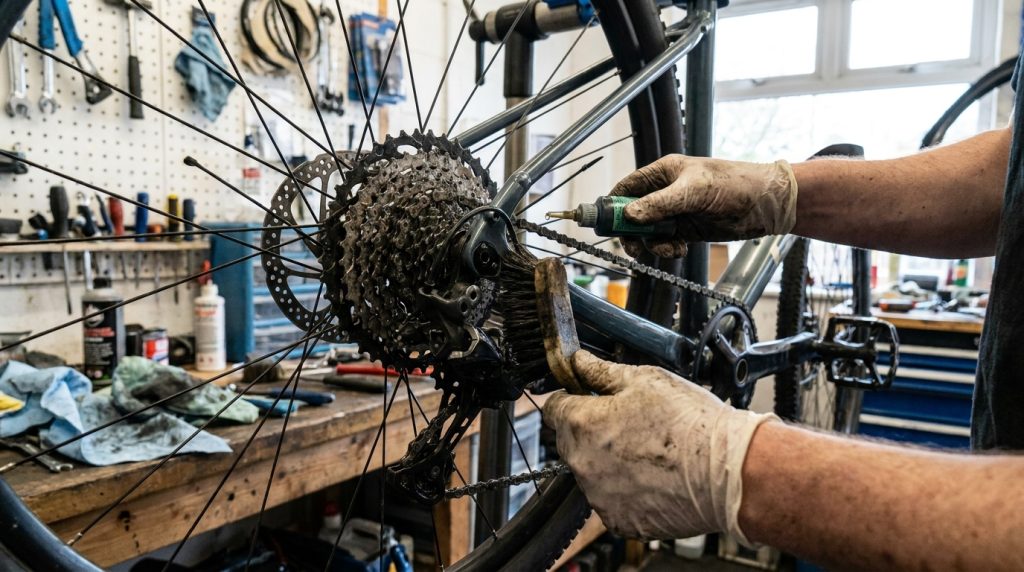
4. Chain Cleaning and Lubrication
The chain is one of the most exposed parts of a bicycle. It collects road dirt, dust and moisture, particularly when the bike is used throughout the year.
A dirty chain can increase friction and contribute to faster wear.
As part of a service, the drivetrain may be cleaned before suitable lubricant is applied. The correct amount of lubrication matters too. Too little can leave the chain dry, while excessive lubricant can attract more dirt.
Keeping the chain clean and properly lubricated can help maintain smoother pedalling and improve drivetrain longevity.
5. Wheels and Tyres
The wheels are another major part of a full service.
The mechanic checks whether the wheels are running straight and looks for problems such as loose spokes, damaged rims or excessive movement. Wheel bearings may also be checked depending on the type of hub.
Tyres are inspected for cuts, cracks, worn tread and other signs of damage. The condition of the inner tubes and valves may also be considered if there is a concern about punctures or air loss.
Correct tyre pressure is important for comfort, grip and handling. The recommended pressure depends on the tyre, rider, bicycle and riding conditions, so there is no single pressure that works for every bike.
6. Headset and Steering Check
The headset connects the fork and handlebar area to the frame and allows the front end of the bicycle to turn.
If the headset becomes loose or the bearings develop problems, steering can feel unusual. You may notice movement when applying the front brake or feel roughness when turning the handlebars.
During a service, the headset is checked for looseness and smooth operation. If required, it can be adjusted or the relevant components can be inspected more closely.
A secure and correctly adjusted headset is important for stable handling.
7. Bottom Bracket Inspection
The bottom bracket sits around the area where the crankset rotates.
Because it is subjected to regular pressure while pedalling, problems can develop over time. Signs of an issue can include clicking, creaking, grinding or unwanted movement around the crank area.
A mechanic can check the bottom bracket for play and assess whether it is rotating smoothly.
If the bearings are worn or damaged, replacement may be recommended rather than simply adjusting the component.
8. Checking Bolts and Fittings
A bicycle contains numerous bolts and fasteners, from the stem and handlebars to the saddle, seat post, brake components and other fittings.
These need to be secure, but tightening everything as much as possible is not the correct approach. Many bicycle components have recommended torque settings, particularly lightweight parts.
During a professional service, important fittings can be checked and tightened appropriately.
This can help prevent unwanted movement while also reducing the risk of damage caused by excessive tightening.
9. Checking Cables and Housing
On bikes with mechanical brakes and gears, cables play an important role in transferring movement from the controls to the components.
Over time, cables can become dirty, stretched, frayed or corroded. Cable housing can also deteriorate.
During a service, the mechanic checks the condition of these parts and assesses how smoothly the cables operate.
If a cable is damaged or badly worn, replacement may be necessary. A new cable can sometimes make a noticeable difference to braking or gear shifting.
10. General Cleaning
Cleaning is another useful part of servicing, although a full service should not be confused with a simple bike wash.
Removing built-up dirt allows the mechanic to inspect components more easily and helps keep moving parts operating properly.
The drivetrain often needs particular attention because accumulated grime can contribute to premature wear.
A clean bicycle is also easier for the owner to maintain between services.
Are Parts Replaced During a Full Service?
Not necessarily.
A service is primarily about inspection, adjustment, maintenance and identifying problems. If a component is worn beyond safe or practical use, the mechanic may recommend replacing it.
Common replacement items can include:
- Brake pads
- Gear or brake cables
- Chains
- Inner tubes
- Tyres
- Cassette or freewheel
- Grips or bar tape
- Bearings
- Other worn components
The exact work depends on the condition of the bicycle. A bike that has been regularly maintained may need only minor adjustments, while a neglected bicycle could require additional repairs.
It is always worth asking what work is included before booking a service and whether replacement parts are charged separately.
How Often Should You Have a Full Bike Service?
There is no single schedule that applies to every cyclist.
Someone riding several times a week in all weather will generally put more stress on their bicycle than someone who only rides occasionally in dry conditions.
You’re riding distance, weather conditions, storage arrangements, bike type and maintenance habits can all affect how often servicing is needed.
Rather than waiting for a serious problem, pay attention to changes in the way your bike feels. Strange noises, poor shifting, weak braking and excessive movement are all good reasons to have the bicycle checked.
Regular basic maintenance at home can also reduce the amount of work required during a professional service.

Why Regular Servicing Is Worth It
A bicycle does not need to be in poor condition before it deserves attention.
Regular servicing can help identify worn components, maintain smooth operation and give you greater confidence when riding. It can also help prevent minor issues from developing into larger mechanical problems.
Most importantly, it gives you an opportunity to have important safety-related components checked by someone who knows what to look for.
Whether you use your bike for commuting, weekend rides, fitness or simply getting around town, keeping it properly maintained is part of responsible cycling.
Final Thoughts A full bike service covers much more than a quick adjustment or clean. It can involve inspecting the frame and components, checking the brakes and gears, examining the wheels and tyres, inspecting the headset and bottom bracket, checking cables and fittings, cleaning the drivetrain and identifying parts that may need attention. The exact work will depend on the bicycle’s condition and the service package you choose. If your bike has started making unusual noises, shifting poorly or feeling less responsive, it may be time for a professional inspection. For cyclists looking for reliable servicing, repairs and bicycle support in London, Lea Bridge Cycles can help keep your bike in good working