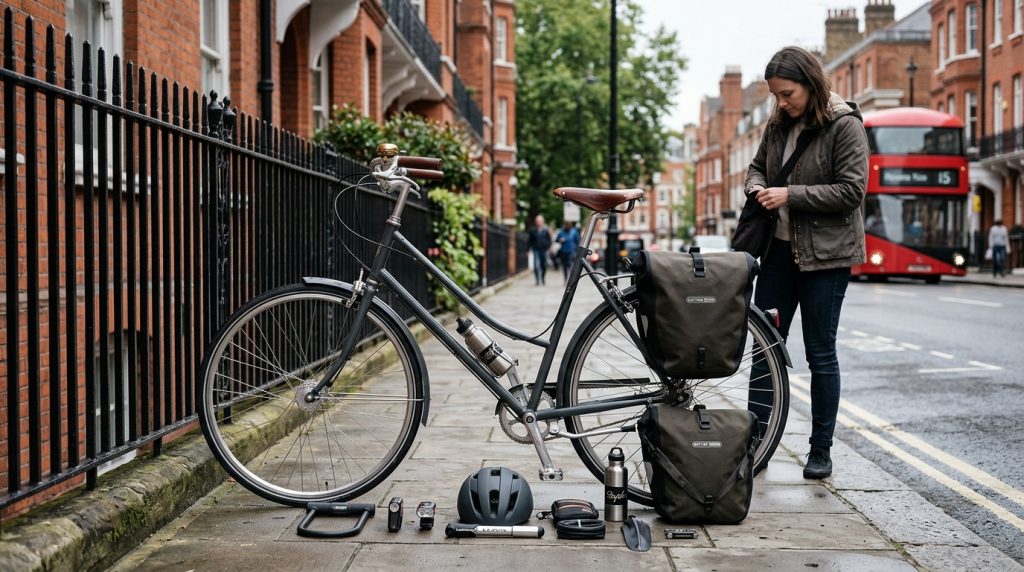
Cycling around London can be one of the easiest ways to get from one place to another. You can avoid traffic jams, skip the search for parking and enjoy a little fresh air along the way. But anyone who cycles regularly in the city knows that having the right bike is only part of the equation.
London cycling comes with its own challenges. Busy roads, unpredictable weather, potholes, long commutes and the occasional mechanical problem can turn a simple journey into a frustrating one. The good news is that a few useful accessories can make a noticeable difference.
Whether you cycle to work every day, ride at weekends or use your bike for short trips around your local area, these ten accessories are worth considering.
1. A Reliable Bike Lock
A good lock should be at the top of every London cyclist’s shopping list.
Bike theft is a genuine concern in busy areas, particularly when bicycles are left outside stations, shops, offices or other public places. While no lock can guarantee complete protection, a strong, well-designed lock can make your bike a much less attractive target.
D-locks are popular because they are compact and difficult to manipulate with basic tools. A sturdy chain lock can also be useful, particularly if you need extra flexibility when securing your bike.
Try to lock the frame and at least one wheel to a solid, immovable object. Avoid leaving your bicycle locked in the same place for long periods whenever possible.
2. Front and Rear Lights
Good lighting isn’t just about helping you see. It also helps other road users see you.
During London’s darker mornings and evenings, front and rear lights can make a major difference to your visibility. A white front light and red rear light are the basic combination most cyclists should have.
Rechargeable USB lights are convenient because they can be topped up at home or at work. If you regularly ride after dark, look for lights with different brightness settings so you can choose the right level for the conditions.
Don’t wait until winter to buy them. A cloudy summer evening or sudden change in weather can make visibility worse than expected.
3. A Properly Fitted Helmet
A helmet should fit comfortably and securely without constantly moving around while you ride.
When choosing one, don’t simply pick a helmet because you like its colour or design. Check the fit first. It should sit securely on your head without being painfully tight, and the straps should be adjusted so the helmet remains stable.
For commuters, lightweight helmets with good ventilation can be particularly comfortable. If you cycle throughout the year, consider a model that works well with your usual clothing and riding conditions.
A helmet isn’t a substitute for safe cycling, but it is an important piece of protective equipment.
4. A Portable Pump
A flat tyre is one of those problems that always seems to happen at the least convenient moment.
You could be halfway through your commute, several miles from home, or running late for an appointment. Carrying a small portable pump gives you a chance to inflate your tyre and continue your journey.
Choose a pump that matches your bike’s valve type and can provide enough pressure for your tyres. Before relying on it during a real emergency, practise using it at home.
It’s also worth checking your tyre pressure regularly. Riding with tyres that are significantly under-inflated can make cycling harder and increase the chance of getting a puncture.
5. Spare Inner Tube and Puncture Repair Kit
A pump can inflate a tyre, but it won’t repair a hole.
That’s why carrying a spare inner tube and a basic puncture repair kit is a smart habit for regular cyclists. A spare tube can often get you back on the road much faster than trying to repair a puncture beside a busy London road.
A typical repair kit may include tyre levers, patches, adhesive and other small tools.
If you’re new to cycling maintenance, learn how to remove a tyre and replace an inner tube before you actually need to do it. Ten minutes of practice in your garage or garden can save a lot of stress later.
6. Mudguards
London weather doesn’t always give you much warning.
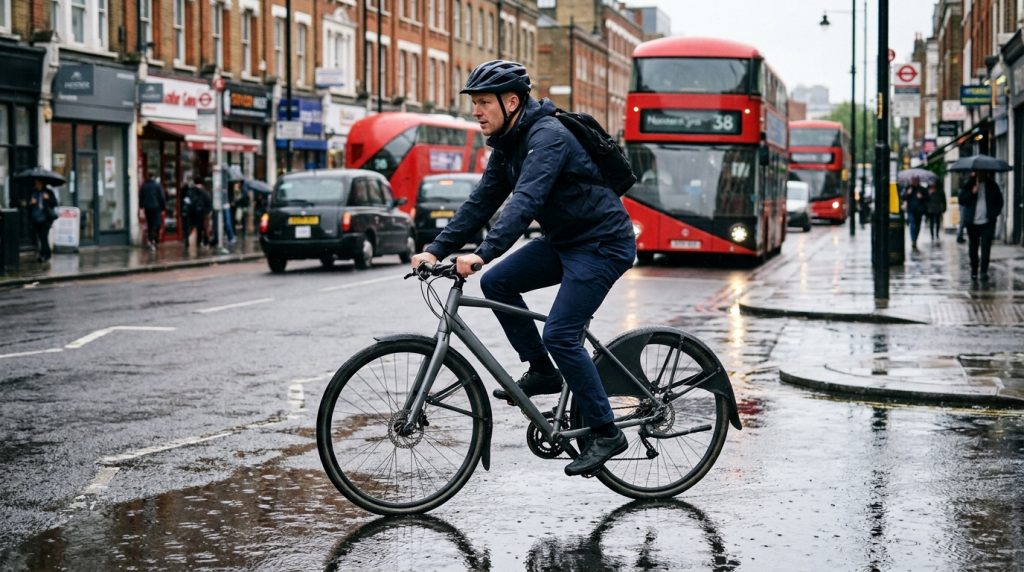
One minute the road is dry; the next, you’re cycling through a puddle created by a recent shower. Without mudguards, water and road spray can end up covering your clothes, shoes and even your back.
Full-length mudguards are particularly useful for commuters who want to arrive at work looking reasonably presentable. They can also help keep some road grime away from your bike’s components.
If you don’t want permanent mudguards, there are removable options that can be fitted when the weather forecast looks particularly unpleasant.
7. A Comfortable Bike Bag or Pannier
Carrying everything in your pockets isn’t practical.
A small backpack can work for short journeys, but regular commuters may find panniers or a frame-mounted bag much more comfortable. A pannier attached to a rear rack can carry work clothes, lunch, a laptop, shopping and other everyday items without putting all the weight on your shoulders.
A waterproof or water-resistant bag is especially useful in London. Even if rain isn’t forecast, it’s wise to have some protection for electronics and important documents.
For shorter rides, a compact saddle bag can be enough for essentials such as keys, tools and a spare tube.
8. A Basic Multi-Tool
You don’t need to become a professional mechanic to benefit from carrying a multi-tool.
A compact bicycle multi-tool can help with small adjustments while you’re out riding. Depending on the model, it may include Allen keys, screwdrivers and other useful tools.
A loose saddle, slightly misaligned component or small adjustment doesn’t necessarily need a trip to the bike shop. Having the right tool with you can sometimes solve the problem in a few minutes.
Just remember that a multi-tool isn’t designed to replace proper servicing. For larger mechanical problems, it’s better to have the bike checked by a qualified mechanic.
9. Water Bottle and Bottle Cage
Even a short cycle can leave you more dehydrated than you realise, particularly during warmer weather.
A bottle cage mounted to your bike gives you easy access to water without having to carry a bottle in your hand or constantly reach into a backpack.
For longer journeys across London, having water available becomes even more important. You may also want to carry an additional bottle if you’re planning a longer ride outside the city.
Choose a bottle that’s easy to remove and replace while stationary. It’s better to concentrate on the road rather than trying to perform complicated bottle gymnastics while riding through traffic.
10. A Bell
A bell is a small accessory, but it can be surprisingly useful.
On shared paths, cycle routes and quieter streets, a gentle bell can let pedestrians or other cyclists know you’re approaching. It is generally much friendlier than shouting or suddenly passing someone at close range.
A bell is particularly useful when visibility is limited, such as when approaching a bend on a shared path.
Use it as a warning rather than a demand. Give other people enough time to react, slow down when necessary and always be prepared for someone not to hear you.
Don’t Forget the Accessories You Actually Need
It’s easy to get carried away when looking at cycling accessories. There are countless gadgets available, from phone mounts and cycling computers to high-tech lights and electronic security devices.
But you don’t need to buy everything.
Start with the essentials that match your riding habits. Someone cycling five minutes to a local shop won’t necessarily need the same equipment as someone commuting 15 miles across London every day.
Think about the problems you’re most likely to encounter. If you ride after work, lights should be a priority. If you commute in wet weather, mudguards and waterproof storage may be more useful. If you’re travelling long distances, spare tubes, tools and a pump become increasingly important.
The best accessories are the ones that make your everyday journeys easier without adding unnecessary weight or clutter.

Make Every London Ride More Enjoyable
Cycling in London doesn’t have to be stressful. With a reliable lock, good lights, a helmet, basic repair equipment and a few weather-friendly accessories, you can be better prepared for the situations that commonly catch cyclists out.
More importantly, these accessories can give you confidence. Knowing that you can deal with a flat tyre, sudden rain or a dark commute makes it easier to enjoy the journey instead of worrying about what might go wrong.
Your bike is the centre of your cycling setup, but the right accessories can turn it into a much more practical everyday form of transport. If you’re looking for advice on choosing the right equipment, maintaining your bike or finding the right bicycle for your needs, Lea Bridge Cycles can help you find a setup that suits the way you actually ride.